

Photographing a Total Solar Eclipse Without Missing the Experience
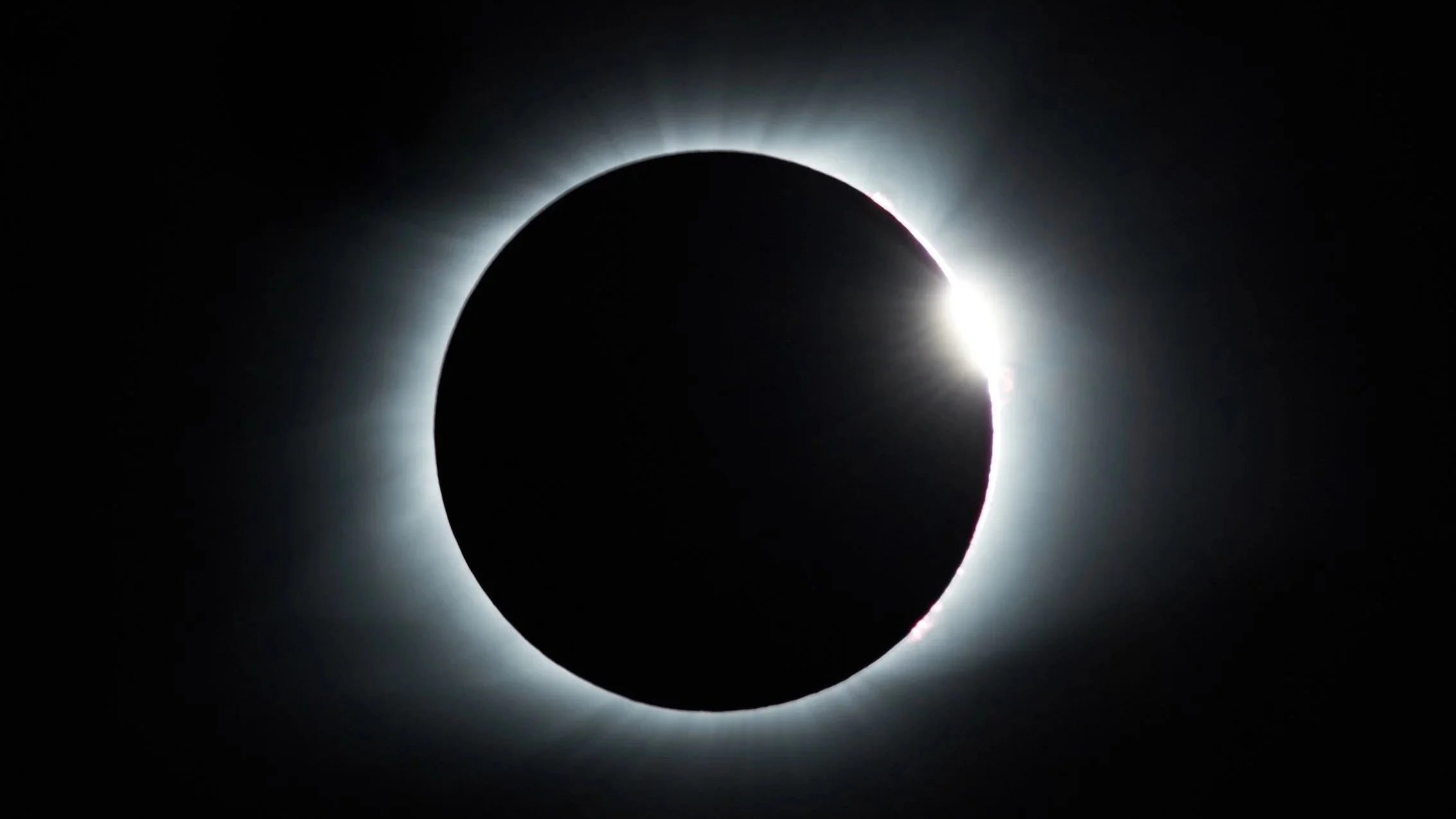
Total solar eclipse, Kentucky, August 2017 by Mathew Schwartz on Unsplash
On 12 August 2026, much of the UK will experience a deep partial solar eclipse. I will be in Mallorca, where the Moon will completely cover the Sun for a brief period known as totality.
I will get to see my first total solar eclipse.
How I choose to experience it matters. The next total solar eclipse visible from the UK will not take place until 23 September 2090.
Before deciding how I might photograph an eclipse, there is another question to answer.
What do I want the experience to be about?
For practical advice about planning and photographing the eclipse, PhotoPills has created a detailed guide to the total solar eclipse on 12 August 2026.
More than one way to experience the same event
I have an interest in astrophotography, which leaves me with a decision.
Do I take camera equipment with me, or use the camera on the phone I will already have in my pocket?
Both would allow me to photograph the eclipse.
What differs is the preparation, attention and responsibility each would add to the day.
Taking camera equipment may allow me to capture more detailed photos, but it would require more planning. I would need to carry it, protect it and understand how I intend to use it before the eclipse begins.
Operating it would require more of my attention while the eclipse is happening.
Using my phone would mean accepting less detail in the photographs. In return, I could travel more lightly, remain part of the experience and share the moment with the people gathered around me.
That is the trade-off I need to consider.
Each choice creates a different experience of the same event.
A theme helps decide what belongs
In Eightly, a theme is an optional filter applied to a boundary.
A boundary is the number of choices a timeframe can hold. Once chosen, those choices are protected within the boundary.
A theme defines what the choices within that boundary relate to. The actions you choose should support the theme.
For the week of the eclipse, I could choose a boundary of seven and apply the theme:
Photographing my first total solar eclipse
My choices might be:
Decide whether to take camera equipment or use my phone.
Understand the settings I will need.
Practise taking the photographs I have planned.
Check the eclipse timings.
Find a suitable viewing location.
Prepare eclipse glasses and any solar filters I need.
Decide when I will stop photographing and watch.
These choices include photography, travel, preparation and safety, but they all relate to the same theme.
I could apply a different theme such as Photography or Travel and make different choices for the same week.
A Photography theme would give more of the boundary to practising, preparing equipment and planning the photographs I want to take.
A Travel theme might give more space to the journey, what I am willing to carry, and how I will reach the viewing location on time.
A theme does not replace the timeframe or boundary. It gives the choices within the boundary a shared focus and helps me decide what belongs.
Preparation protects the experience
Preparation is not only about improving the photographs. It reduces the number of decisions competing for my attention during the eclipse.
If I take camera equipment, I need to understand how I will carry it, set it up and use it. I need to practise before the event so that I am not learning what to do while the eclipse is happening.
If I use my phone, I still need to decide what I want to photograph and how much attention I want to give it.
I also need to decide when I will stop during totality so I can be in the moment.
The aim is not to remove photography from the experience.
It is to give photography a boundary.
Watching and photographing the eclipse safely
Looking directly at the Sun is unsafe during the partial phases of an eclipse.
Eclipse glasses and handheld solar viewers should conform to the ISO 12312-2 international standard and should be purchased from a reliable manufacturer or authorised supplier. Ordinary sunglasses are not suitable.
Cameras, binoculars and telescopes require their own suitable solar filters fitted securely over the front of the optics. Eclipse glasses worn over your eyes do not make it safe to look through unfiltered magnifying equipment.
Eye protection may be removed only during complete totality, when the Moon has entirely covered the bright face of the Sun. It must be replaced before any direct sunlight returns.
The American Astronomical Society provides detailed solar-eclipse eye-safety guidance.
What should the day be about?
I have not yet decided what I will take to Mallorca.
The choice is not simply between a camera and a phone.
It is between the different demands they would place on the day and the experience.
Taking a camera may help me create the bucket shot, something detailed that I can share and return to afterwards.
Using my phone would allow me to travel more lightly. The photographs would contain less detail, but I could absorb the atmosphere and experience the eclipse with fewer things competing for my attention.
A theme does not tell me exactly what to do. It helps me to make choices that align with what I want the timeframe to be about and what I have reserved space within the boundary for.
On 12 August, the Moon’s shadow will arrive, the light will change and the Sun will disappear.
Then the moment will pass.
I want to decide what the experience is about before it begins.